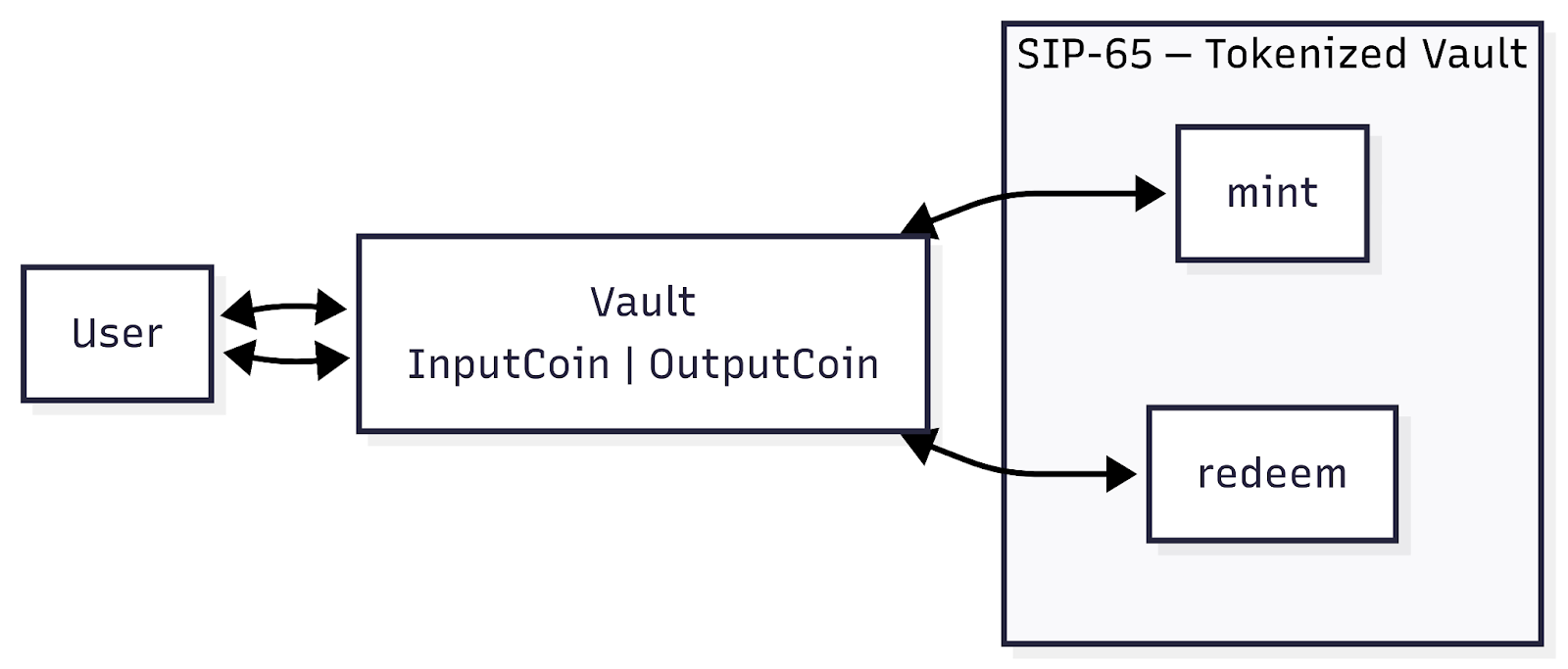
Improvement Idea: The Standardized Interface for Tokenized Vaults
TL;DR: A modular, composable vault interface standard for Sui that unifies vault patterns, reduces code duplication, streamlines developer onboarding, and strengthens auditability.
Problems:
1. Lack of Composability Between Protocols
The absence of composable interfaces across protocols indicates a breakdown in architectural standardization and shared design practices. This limits modular integration and strategic reuse, increasing integration costs and reducing innovation velocity. Addressing this requires unified interface frameworks that facilitate cross-protocol interoperability through common interaction patterns and extensible logic boundaries.
2. Not Enough Generic Solutions
A lack of generic, reusable components signals insufficient emphasis on design abstraction and architectural generalization. This leads to ecosystem fragmentation and slows scaling. Governance should promote the development of platform-agnostic standards and incentivize architectural patterns that support multi-context deployment.
3. Multiple Duplication of Logic
Duplicated Move modules bloat costs and risks by demanding separate gas profiling and security audits. Consolidating your core logic into a single, versioned Move package and injecting vault strategies via generic type parameters or capability-based hooks would eliminate code duplication. This design promotes Separation of Concerns by isolating core protocol logic from vault-specific behavior, enabling independent reasoning, testing, and auditing. Combined with a Component Repository pattern for shared modules and CI-driven compatibility checks, this approach enables instant update propagation, improves gas efficiency, and shrinks the on-chain attack surface.
4. Complexity for Developer Onboarding
Onboarding complexity often stems from unpredictable architecture, undocumented interfaces, and insufficient tooling. Governance should drive standard developer experience practices, enforce consistent interface design, and encourage the use of simplified abstraction layers. This reduces cognitive overhead and accelerates integration and collaboration across new contributors.
Description:
Unified vault standard for protocols ( Yield Strategies, RWA, Lending - Borrowing, etc. )
100% DeFi-compatible shared vault coins.
This proposal aims to establish a standardized and composable vault interface that enhances cross-protocol interoperability, streamlines developer integration, strengthens auditability and control assurance, and reduces redundant implementations — all in alignment with governance principles like process efficiency, reusability, and secure design integrity.
Promotes interoperability and solution reuse
(Manage Solutions Identification and Build)
The SIP vault interface adopts a modular architecture that mirrors principles seen in well-known software abstraction techniques, such as those used to adapt disparate implementations into a shared interface. This design facilitates interoperability and solution reuse, allowing vault logic to be extended and composed across multiple DeFi protocols on Sui without requiring system-specific modifications.
Streamlines developer engagement and contribution
(Manage Human Resources)
By encapsulating complexity within a predictable and narrowly scoped interface — in line with widely used software abstraction strategies — the SIP model lowers the entry barrier for development teams. This structure enhances developer efficiency and coordination, enabling faster onboarding, reduced context switching, and increased focus on innovation rather than infrastructure alignment.
Strengthens auditability and compliance assurance
(Monitor, Evaluate, and Assess Performance and Conformance)
The clearly defined interface boundaries and deterministic behavior of SIP-based vaults support robust auditing and verification practices. Leveraging design patterns that prioritize interface minimalism and explicit contract semantics, this architecture establishes a verifiable baseline for compliance instrumentation, formal verification pipelines, and systematic risk assessment across heterogeneous deployments.
General Idea
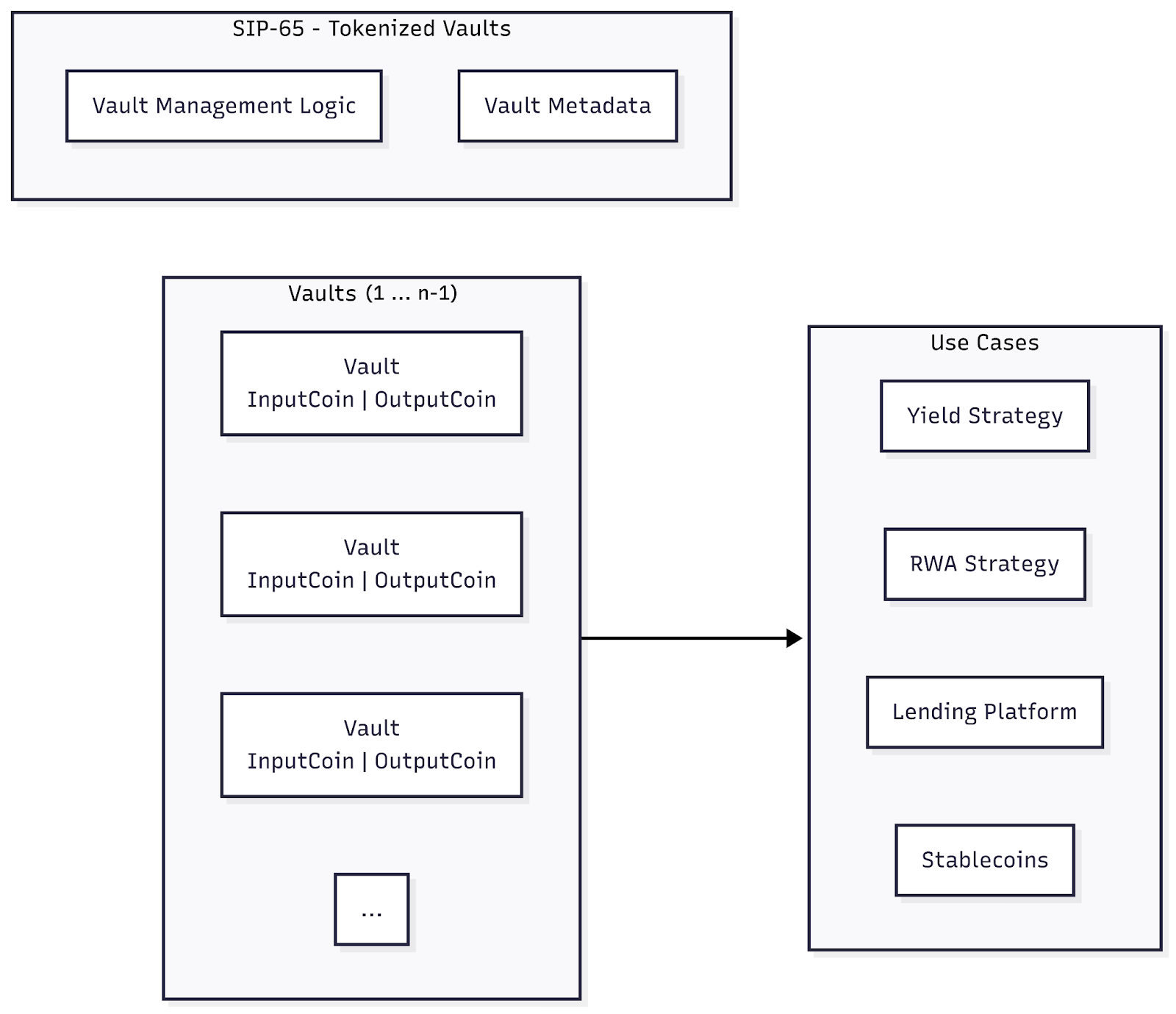
The adoption of a unified vault interface will unlock a wide range of DeFi use cases across the Sui ecosystem. Protocols will be able to design modular yield aggregators, offer permissionless structured products, and build automated financial strategies — all through a predictable, composable vault abstraction. This standard enables advanced mechanisms such as meta-vaults, automated rebalancing, AI-managed agent vaults, and collateralized lending markets backed by vault shares. It also paves the way for a shared liquidity layer across protocols, where standardized vault tokens can act as interoperable financial primitives. By establishing this foundation, the Sui ecosystem will be positioned to scale complex yield mechanisms while maintaining composability, gas efficiency, and developer clarity.